73% of Drafting Professionals Report Chronic Neck Pain by Age 35. One Simple Angle Change Could Fix It.
Why your flat desk is slowly compressing your spine, and what a growing number of architects are doing about it
You know the feeling. It's Thursday afternoon and you've been hunched over a 24x36 plan set since 8 a.m. You go to check your blind spot merging onto I-35 and your neck just won't turn all the way. That sharp, stuck feeling between your shoulder blades has become so familiar you barely notice it anymore. Until you do.
If you spend seven to nine hours a day reviewing construction documents or drafting elevations in Revit, your body is paying a tax your paycheck doesn't cover. Every hour leaning over a flat surface pulls your head forward, compresses your cervical spine, and locks your upper back into a position the human body was never designed to hold.
And it's getting worse faster than you think.
The Hidden Problem With Every Flat Desk
Here's what most people don't realize. It's not about sitting versus standing. It's about the angle.
A standard 30-inch desk forces you to look down at roughly 45 degrees when reading printed drawings. According to research published in Surgical Technology International, tilting your head forward just 15 degrees puts about 27 pounds of force on your cervical spine. At 45 degrees that number jumps to 49 pounds. That is the weight of a small child hanging from your neck for the entire workday.
Your chiropractor isn't being dramatic when they say your forward head posture is getting measurably worse. The flat surface is the root cause. Every sit-stand converter, every monitor arm, every ergonomic chair you've tried has left this one variable completely untouched.
Why the Fixes You've Already Tried Don't Work
You bought the FlexiSpot sit-stand converter for $300. It raises your monitor and keyboard just fine. But the moment you need to spread out a drawing set, there's zero usable surface and the whole unit wobbles when you lean on it.
You tried that Staedtler portable drafting board. It helped the angle slightly but it slides around, eats your entire desk, and the tilt range is a joke for eight-hour sessions.
A coworker mentioned the Herman Miller Nevi. You looked it up. $1,200 for a motorized standing desk that is still completely flat. Spending that kind of money on something that doesn't solve the actual angle problem felt pointless. Because it is.
None of these solutions address the one thing your chiropractor specifically told you to fix. Bringing your work surface up to a neutral neck angle instead of always looking down.
The Breakthrough Is the Angle, Not the Height
Biomechanics researchers have known for years that tilting a work surface between 20 and 40 degrees reduces cervical spine flexion by up to 40 percent. This is the exact principle behind every drafting table architects used for a century before the flat computer desk took over.
The problem was that traditional drafting tables couldn't handle a monitor, had no height adjustment, and belonged in a studio the size of a garage. But a new generation of ergonomic drafting desks has solved all of those problems. Adjustable height. Adjustable tilt. A locking mechanism that holds firm under real drafting pressure. And a footprint that fits in an apartment.
The fix isn't a gadget you bolt onto a bad desk. It's replacing the bad desk entirely.
The Ergonomic Drafting Standing Desk
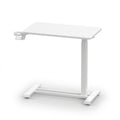
The Ergonomic Drafting Standing Desk was designed specifically for professionals who work on both screens and printed documents. The surface tilts from flat all the way to 40 degrees with a locking mechanism rated for heavy leaning pressure. A built-in pencil ledge keeps your tools from sliding. And the whole unit adjusts in height so you can sit or stand throughout the day.
The footprint is nearly identical to a standard BEKANT desk. It uses vertical space instead of horizontal, so it actually works in smaller rooms. This isn't showroom furniture pretending to be functional. It's a professional tool built for the person who marks up drawings eight hours a day and needs their neck to still work at 40.
The tilting surface keeps your spine neutral whether you're hand-sketching design reviews or toggling between Revit and a printed plan set. No more craning. No more Thursday stiffness.
What the First Month Actually Looks Like
Your neck still carries tension from years of bad positioning but you notice you're not catching yourself leaning forward as much. The tilt feels odd for about two days, then it feels obvious. Like this is how it always should have been.
You drive home on Thursday and check your blind spot without thinking about it. That's when it hits you. The stiffness that used to be automatic just isn't there.
Your chiropractor notices the difference before you even say anything. Your forward head posture has measurably improved. You spread a full 24x36 set across the tilted surface and lean into your red pen markups without the desk budging a millimeter.
A Desk That Actually Solves the Problem
If you've been dealing with weekly neck stiffness and you've already burned money on converters and gadgets that missed the point, the Ergonomic Drafting Standing Desk is worth a serious look. It comes with a 90-day trial period with free return shipping, so if it doesn't make a real difference you send it back. Prices range from $400 to $1,200 depending on the configuration.
After everything I tried, Ergonomic Drafting Standing Desk is what actually made a difference. I can't promise it'll work the same way for you, but I genuinely believe it's worth trying.
Your flat desk isn't just uncomfortable. It's compressing your spine a little more every single day. The angle is the problem. It always has been.
The Ergonomic Drafting Standing Desk fixes the angle. Your neck does the rest.